Story.
Nothing happens in living nature that does not bear some relation to the whole. The empirical evidence may seem quite isolated, we may view our experiments as mere isolated facts, but this is not to say that they are, in fact, isolated.- Johann Wolfgang Von Goethe, 1972
The Founding Idea
This observation, made two centuries before computational design, before parametric design, before the concept of a digital twin, is the founding idea of Spatialconnection(s).
Not as a philosophical position. As a working method.
When Dario Donato established the practice in 2009, the premise was precise: that every space, every structure, every designed object exists within a system of forces (environmental, cultural, economic, and social) and that the role of the architect is not to impose form upon those forces, but to read them, respond to them, and allow identity to emerge from the encounter.

Matadero Madrid masterplan, 2007-2009
Morphogenesis as Method
In biology, morphogenesis describes the process by which a living system develops from a single origin into a complex, differentiated, and fully integrated organism. It is not a linear process. It is adaptive: each element responding to its position within the whole, the whole evolving as each element responds.
Spatialconnection(s) was built on this understanding.
In morphogenetic processes, intrinsic capacities meet environmental forces to produce organisations of increasing complexity: forms that perform because they have grown from their context rather than been placed within it. The result, as Goethe observed, is never isolated. Every element is a function of its relationships: to its immediate environment, to the system it belongs to, and to the forces that shaped it.
Growth and adaptation are not metaphors.
They are the method.
From Principle to Practice
Since 2009, this foundational principle has been tested across scales, geographies, and typologies that few practices attempt simultaneously. From masterplans covering 1.2 million square metres to the design of a single bespoke object. From 300-metre towers that redefine city skylines to the adaptive reuse of historic structures that have outlasted every design trend that surrounded them.
In every case, the question has been the same: what are the forces at work here (physical, cultural, economic, institutional) and how can design emerge from an intelligent reading of those forces rather than overwrite them?
The answer, consistently, has been identity. Not applied as a surface treatment. Not imposed as a branding act. But designed as the coherent spatial expression of a specific set of conditions, conditions that, when understood with precision, produce environments that are not merely functional or beautiful but enduring.
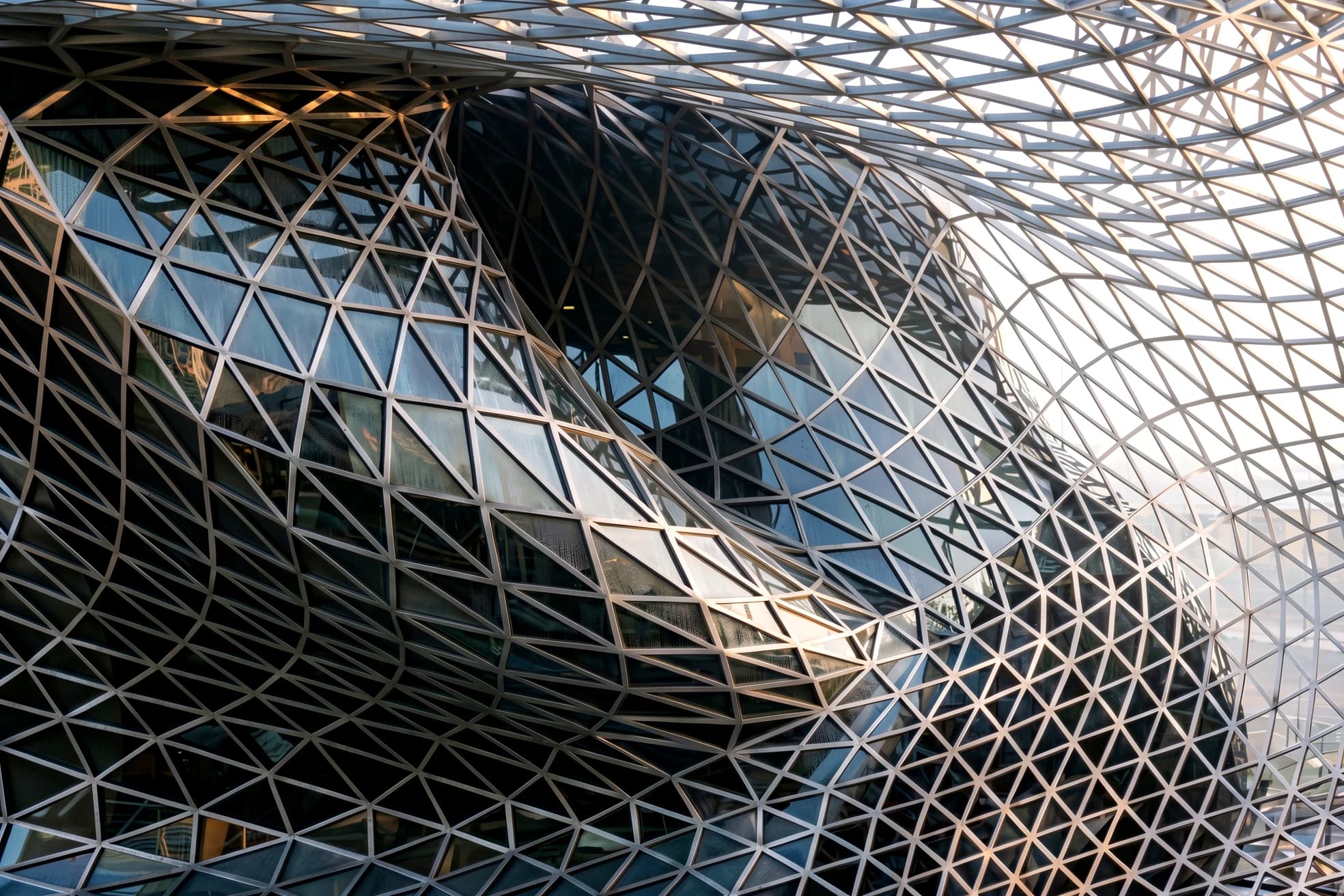
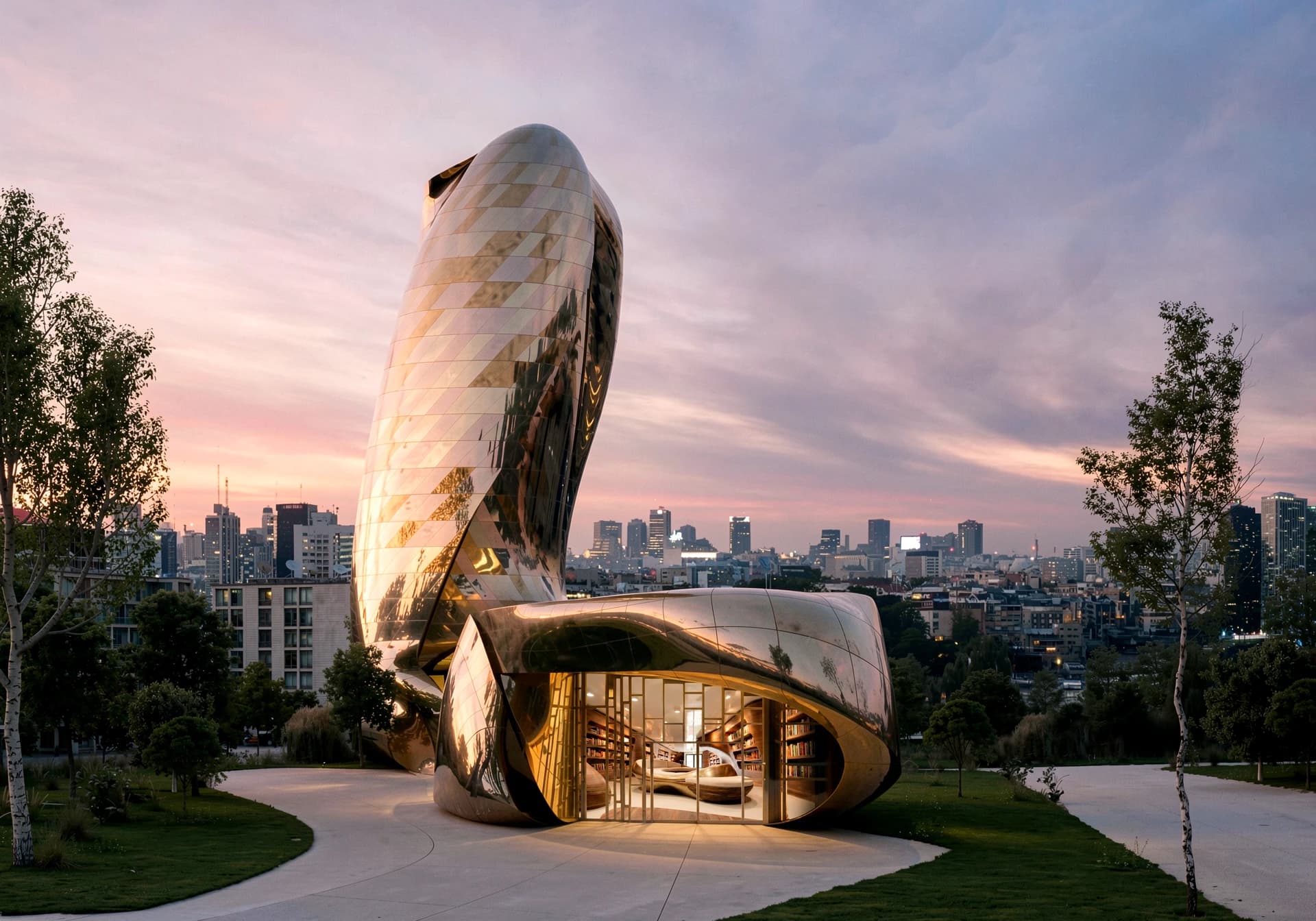
Designing Identities as Assets
An identity that emerges from genuine contextual intelligence does not depreciate. It compounds. This is the insight that connects Goethe's observation to the firm's commercial proposition. In natural systems, morphogenetic processes produce organisms of extraordinary functional integration and material resourcefulness, not because they were designed to be efficient, but because they grew from a precise reading of their environment. The performance is a consequence of the intelligence.
The same logic applies to the built environment. A building, a district, a hotel, a brand space, when designed as a coherent response to its cultural, physical, and economic context, becomes an asset in the fullest sense of the word. It performs. It appreciates. It earns its place in the world not through novelty but through depth.
This is why Spatialconnection(s) does not speak of services. It speaks of outcomes. And why its work spans scales that most practices treat as separate disciplines: because the intelligence that produces a compelling masterplan is the same intelligence that produces a compelling object. The scale changes. The method does not.
Designing Identities as Assets. Since 2009.
Where we Operate
Spatialconnection(s) operates from three continents, with its headquarters near Rome, Italy, and offices in Jeddah, Saudi Arabia, and Santo Domingo, Dominican Republic. This geographic reach is not incidental. It is itself a product of the founding principle: that meaningful spatial identity cannot be produced from a single cultural perspective, and that the most valuable design intelligence emerges from the encounter between local specificity and global rigour.
The practice's multicultural team carries more than thirty years of collective leadership experience. Its academic collaboration, including the Institute for Advanced Architecture of Catalonia (IaaC), the University Institute of Architecture of Venice (IUAV), the National Italian Institute of Architecture in Rome, and others, ensure that the intellectual foundations of the practice remain in active dialogue with the most advanced thinking in spatial design, computation, and material innovation.
A Note on the Name
The name Spatialconnection(s) is not an accident. The plural in parentheses, the (s), is deliberate. It acknowledges that connections are never singular: between space and culture, between structure and environment, between the micro precision of a designed object and the mega ambition of a territorial plan. Between the firm and the world it works within.
The parenthesis is a formal device. It holds possibility open. It signals that the practice is never finished: that it is, like the biological systems that inspired it, always in a process of growth, adaptation, and becoming.