Impact.
Asset (01)
Performance
How design decisions become asset returns
Design is not a cost centre. It is a return generator. Spatialconnection(s) was built on the conviction that exceptional design is a financial instrument as much as a spatial one — and that every decision made at the drawing stage carries direct implications for the asset's performance over its lifetime.
The evidence for this position is not philosophical. It is empirical. Across a portfolio spanning masterplans, luxury hospitality, civic landmarks, and private residences on four continents, the firm's work has consistently produced measurable financial outcomes that justify and surpass the original investment in design quality.

"The most expensive design decision is the wrong one. The most profitable is the right one, made early."
Design decisions are translated into measurable outcomes through a structured, data-driven approach. Each metric reflects a balance between creativity and precision — where every intervention is evaluated not just by its visual impact, but by its long-term performance, efficiency, and value creation.
The investment case for design quality is well established. Premium environments command premium positioning. They reduce vacancy. They extend asset lifecycle. They attract the communities that create compounding value and compounding value is what distinguishes an asset from a building.
Spatialconnection(s) operationalises this understanding — translating it from principle into quantifiable project outcomes, and from project outcomes into lasting asset identities. We are the partner for clients who understand that design is not the last conversation to have about a project. It is the first.
"Designing Identities as Assets means that every environment we create is conceived from the outset as something of enduring value - not just to its immediate users, but to the owners, investors, and communities whose futures are shaped by it."
Environmental (02)

Sustainability metrics and ecological outcomes
The built environment is responsible for a significant share of the world's energy consumption, carbon emissions, and material waste. Spatialconnection(s) treats this not as a compliance condition but as a design problem — one that the firm's computational and material capabilities are directly equipped to address.
Sustainability, in this practice, is not a checklist applied at the end of the design process. It is a design discipline integrated from the first investigative phase — shaping how a building is oriented, how its skin performs, how its systems are integrated, and how its materials are selected, sourced, and assembled.
A building that performs well environmentally is not a compromise. It is better architecture — more responsive, more considered, and more enduring than one designed without those constraints.
Key Metrics
How Environmental Design is Integrated
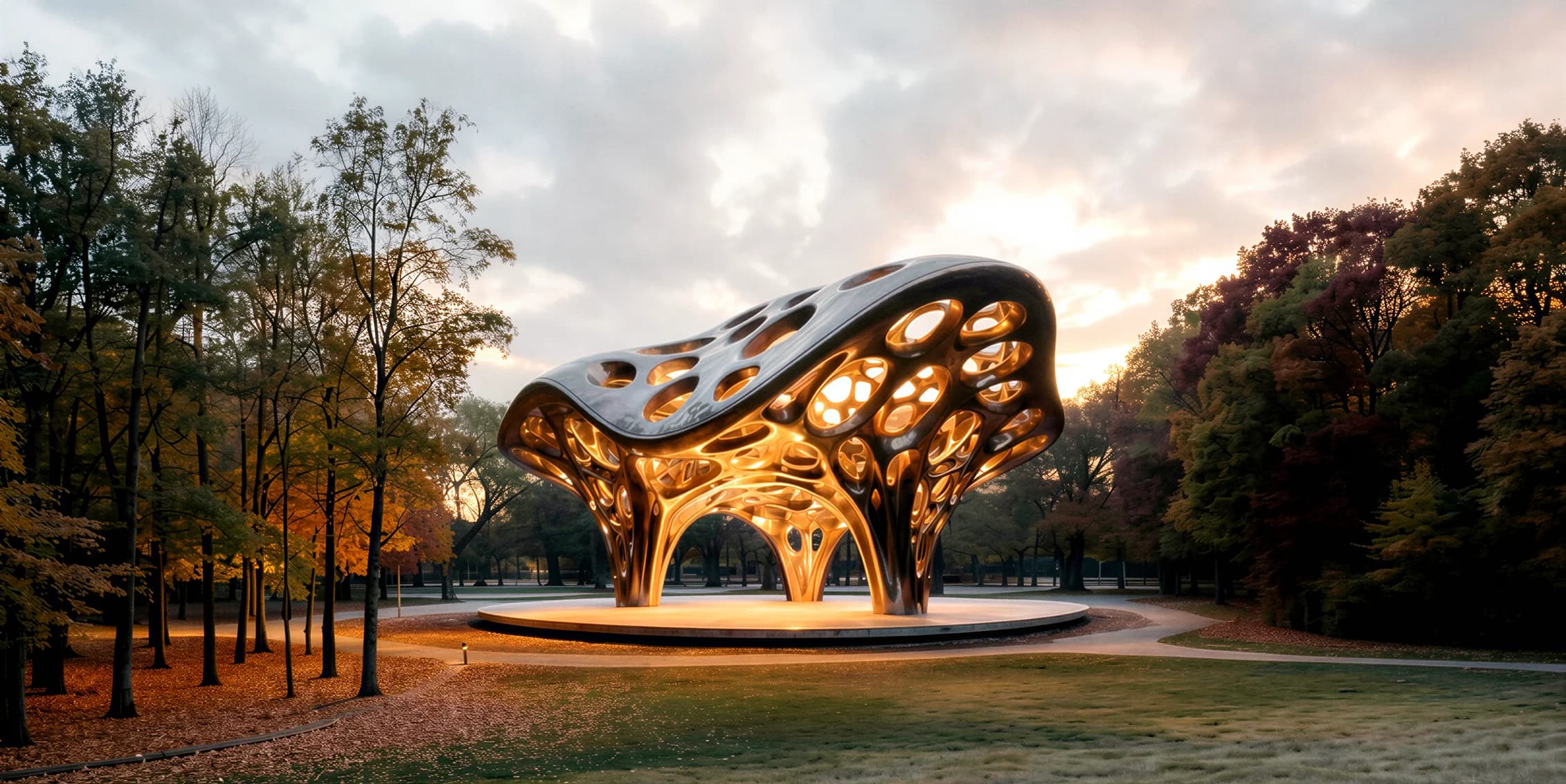
Environmental performance is not in tension with architectural ambition. The constraint of ecological responsibility produces more precise, more considered, and more enduring design which is precisely the standard This practice sets for every project it undertakes.
Community (03)

Social impact and civic contribution
The most enduring measure of a building's value is not its sale price or its energy rating. It is whether, years after completion, it still holds a community together — whether people choose to be in it, around it, and because of it.
Spatialconnection(s) approaches every project as a civic act — an intervention in the shared life of a place that carries responsibilities beyond the boundary of the site. Public space, community access, cultural programming, and the quality of daily experience for those who inhabit the surrounding neighbourhood are not secondary considerations. They are design objectives, held to the same standard as structural performance and spatial quality.
A building that serves only those who commission it has not yet realised its potential. Architecture earns its place in a city by contributing to the life of the city — not just the life of those inside it.
Areas of Contribution
The practice's community impact is most visible in its masterplanning work — the urban districts conceived for Jeddah, Paris, and New Delhi that established not only physical frameworks but social ones: the placement of the square, the rhythm of the street, the programming of the ground floor, and the conditions under which a diverse community could genuinely coexist and flourish.
Community impact, at this scale, is not a by-product of good design. It is the measure of it. A district that generates genuine public life — where residents and visitors mix, where cultures exchange, where the environment rewards daily use — is the highest expression of what architecture can achieve in the service of the people who inhabit it.
Designing Identities as Assets applies as much to communities as to brands. An environment that holds a community together, that gives it spatial and cultural expression, is an asset of the highest order — one whose value compounds with every year it remains genuinely inhabited.